


Life Cycle Analyses (LCA) has become today a basis for product makers to rethink about their products. LCA is a technique that helps to assess environmental impacts associated with all the stages of a product’s life from-cradle-to-grave i.e., from raw material extraction through materials processing, manufacture, distribution, use, repair and maintenance, and disposal or recycling. We are now looking for cradle-to-cradle as our goal.
Increasing number of products are now designed and manufactured to meet requirement of eco-labels that insist on “exclusions” of certain harmful substances, set thresholds on resource consumption (“inputs”) and waste generation (“outputs”). The idea is to minimize adverse environmental and health impacts, reduce risks to ecosystems and consumers in all phases of the life cycle of the product. Products that are eco-labeled are therefore expected to be lean on environmental impacts/risks. Through change in design, manufacturing process, packaging and the logistics of distribution, the product makers meet the eco-label requirements. LCA provides the strategy of Life Cycle Management (LCM)
Typically, life cycle of a product goes through various phases. Figure 1 shows life cycle phases for a T-shirt.
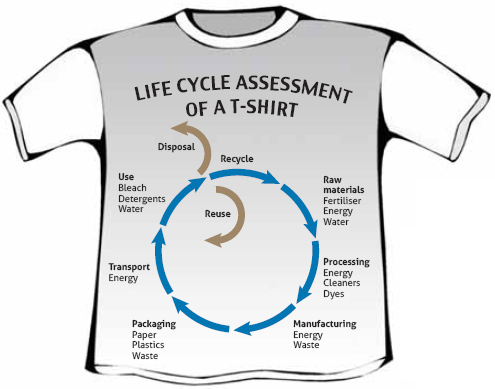
Figure 1 – Life cycle phases for a T-shirt.
(adopted from Worldwatch Institute, Worldwatch Paper 166: Purchasing Power: Harnessing Institutional Procurement for People and the Planet, July 2003, http://www.worldwatch.org)
Indeed, each phase of life cycle for a product corresponds to different intensities of environmental impacts. For some products, processing or manufacturing phase dominates and for some, it is the use phase where substantial environmental impacts occur.
The impacts in the manufacturing phase are best addressed by the manufacturer through product redesign, sustainable packaging, influencing the supply-chain, deploying better logistics and taking back the used product as extended producer responsibility. The use phase impacts of the product are however to be managed at the consumers end. If the consumer is careless, insensitive or not aware of how to use the product correctly then the impact in the use phase can be substantial.
There are many products that have low environmental impact in the manufacturing phase. These products with their low environmental impact in the making appear to be like dwarfs and hence appealing while making the choice! But in the use phase, the same products lead to significant environmental impacts; especially if abused or carelessly used. The environmental impacts of such products cast tall shadows! Examples of such products are incandescent lamps, iron, washing machine etc. Figure 2 shows normalized percentage of environmental impacts (on Y-axis) for a washing machine in different phases. Clearly, you would notice that for a washing machine the use phase dominates.
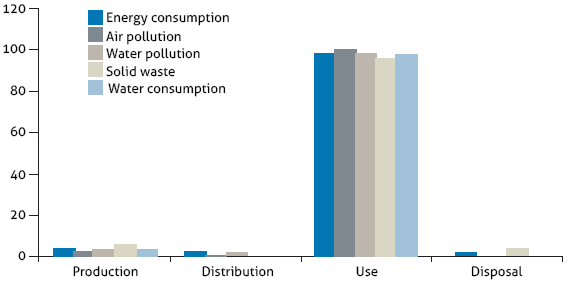
Figure 2: LCA of a washing machine, source: Andrew Sweatman
It is important therefore that the product makers and product users or consumers work in tandem and communicate with each other. Both must implement or influence responsible manufacturing and undertake responsible product use. Only then we will be able to achieve the goal of sustainable production and consumption. It is our joint responsibility.
We as consumers should therefore be very particular about correct use of the products we buy. Most product makers today guide the consumers regarding optimum use of the product not only limited to safety but also towards minimizing resource consumption and waste generation. Often, we do not read the product-use instructions carefully nor do we practice the instructions in all seriousness.
When you get a new washing machine at home, you may like to do a “family session” of collective reading of the user manual and learn how to use the washing machine in the most energy and water efficient manner. For example, washing machines should be best run with full load and one should practice line drying as much possible. Levy’s claim that the use phase impacts of a jean can be reduced by 50% if it is line dried and washed in cold water. If every U.S. household used only cold water for washing clothes, then it is estimated to be equivalent to nearly 8 percent of the Kyoto target for the U.S on carbon dioxide emissions! So “use phase” of such products really matters.
So, when we buy a product, we should select the product by looking at its full life cycle impacts. As a consumer, take on the responsibility to minimize environmental impacts in the use phase and insist for guidance from the product makers. Let us be responsible consumers and not cast ‘’tall shadows’’ with the products we use and consume!
(This article is a modified version of the one published in Green Prospects Asia in Malaysia. The picture on “tall shadow” is sourced from http://www.todayifoundout.com/index.php/2013/01/the-man-who-was-a-dwarf-and-later-a-giant/ )
For students – Take up a research project on LCA of some of the products like washing machine. An electric iron, a cotton T-shirt could be examples where use phase dominates. Consider a bicycle on the other hand where impacts in the making or manufacturing are much more than during use. You may also like to do household surveys to check how much gets read and followed up on the use guides/instructions provided by the product makers. How well are these manuals done and do they focus on reducing impacts in the use phase.